NewExtra server protection with Measured Boot & UKI images.View Measured Boot
BlogDocumentationFAQNo Third-Party CookiesContact Us
  • Pricing
Log inSign up
Cloud VPSVDSMemory-Optimized VDSStorage-Optimized VDSWindows VPSBitcoin VPSDDoS ProtectionPrivate Networking (VPC)Floating IPsAdditional Server SupportMicrosoft LicensesDatacenterNetworkDocumentationFAQNo Third-Party CookiesConfidential ComputingSelf-Hosted VPNBlogAboutBrand GuidelinesAffiliatesContact UsLegal & Compliance

Products

  • Pricing
  • Cloud VPS
  • VDS
  • RAM-Optimized VDS
  • Storage-Optimized VDS
  • Windows VPS
  • Bitcoin VPS
  • DDoS Protection
  • Private Networking (VPC)
  • Floating IPs
  • Microsoft Licenses
  • Additional Server Support

Explore

  • Documentation
  • Developers API Docs
  • FAQ
  • Datacenter
  • Network
  • Looking Glass
  • Confidential Computing
  • Cookie Policy
  • Self-Hosted VPN

Company

  • Blog
  • Contact Us
  • About Us
  • Brand Guidelines
  • Affiliates

Legal & Compliance

  • Terms of Service
  • Privacy Policy
  • Data Processing Agreement
  • Acceptable Use Policy
  • Microsoft Software Terms of Use
  • Refund Policy
  • Report Abuse

Products

  • Cloud VPS
  • VDS
  • RAM-Optimized VDS
  • Storage-Optimized VDS
  • Windows VPS
  • Bitcoin VPS
  • DDoS Protection
  • Private Networking (VPC)
  • Floating IPs
  • Microsoft Licenses
  • Additional Server Support
Pricing

Explore

  • Documentation
  • Developers API Docs
  • FAQ
  • Datacenter
  • Network
  • Looking Glass
  • Confidential Computing
  • Cookie Policy
  • Self-Hosted VPN

Company

  • Blog
  • Contact Us
  • About Us
  • Brand Guidelines
  • Affiliates

Legal & Compliance

  • Terms of Service
  • Privacy Policy
  • Data Processing Agreement
  • Acceptable Use Policy
  • Microsoft Software Terms of Use
  • Refund Policy
  • Report Abuse

© VPS.BG Ltd. 2026 · All rights reserved!

Made with passion in Bulgaria · VAT ID: BG203144520

Contents

  • Restoring a backup from your server management page
  • Restoring a backup from the Orchestration tab

Subscribe to Our Newsletter

Join 5000+ subscribers and receive helpful content, deals and more! We promise no spam - 100% great content. Unsubscribe anytime.

Share Article

#Tutorial
  1. Documentation
  2. /
  3. #Tutorial
  4. /
  5. How to restore a manual or automatic backup to your VPSBG server

How to restore a manual or automatic backup to your VPSBG server

Published: 28 September 2021 • Updated: 13 February 2026 • 3 min read

#Tutorial#VPSBG#Security

Taking manual backups of your server or having automatic backups enabled is a great way to roll-back your files and system in case of failure, malfunction or malware infestation. Given the power of these features, it is important to know how to correctly use them in order to return your server back to a previous state. This is why in this step-by-step tutorial we will teach you how to restore a manual or automatic backup to your VPSBG server. 

Restoring a backup from your server management page

Regardless of whether you want to restore a manual or an automatic backup, you need to do these steps prior to either restoration process.

Step 1: Log into your VPSBG account

Start by logging into our Console by entering your email and password.
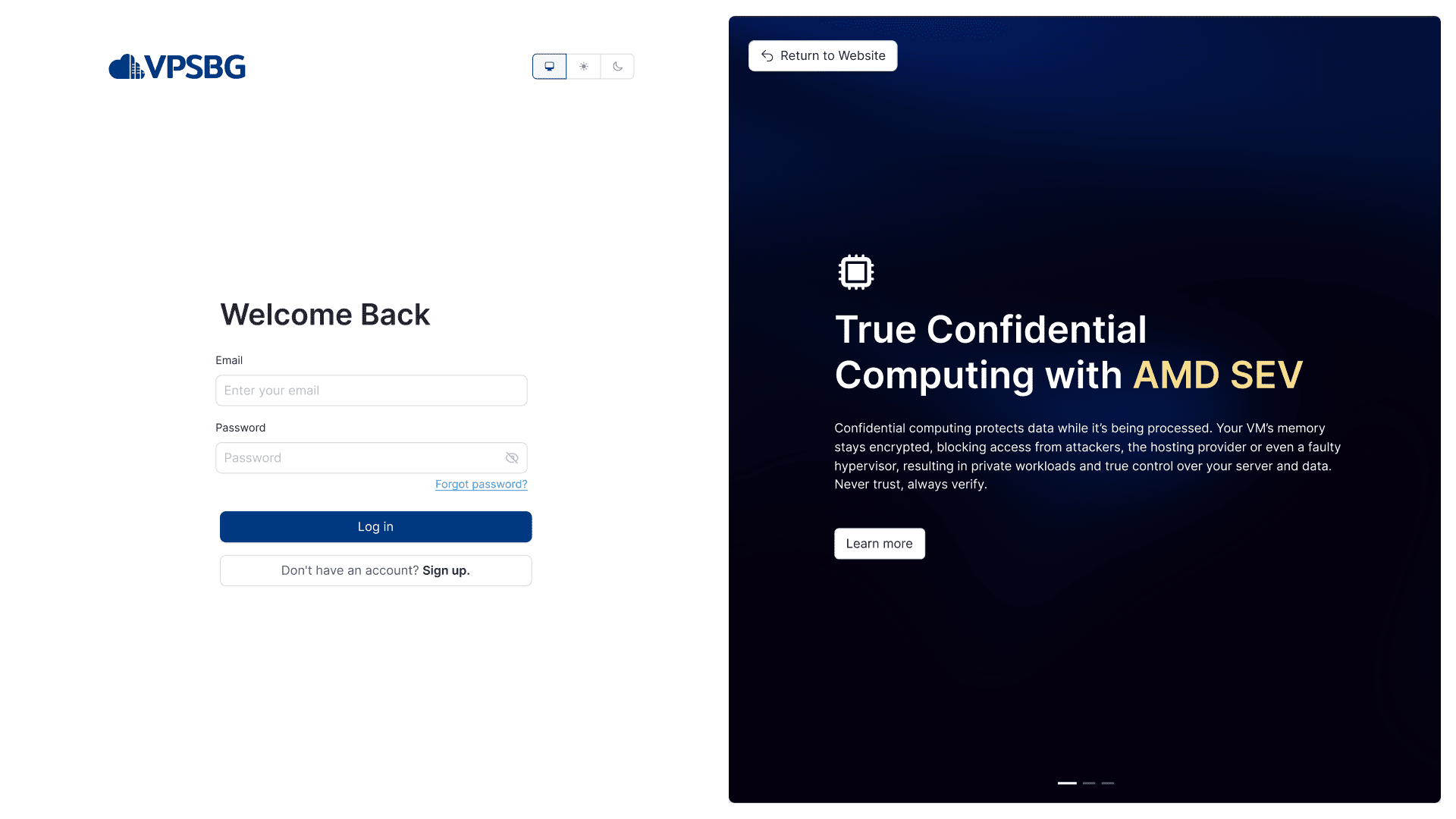
log into the console

Step 2: Navigate to your services from the dashboard

Once you have successfully logged in, you will be presented with your dashboard, the appearance of which should be like so:
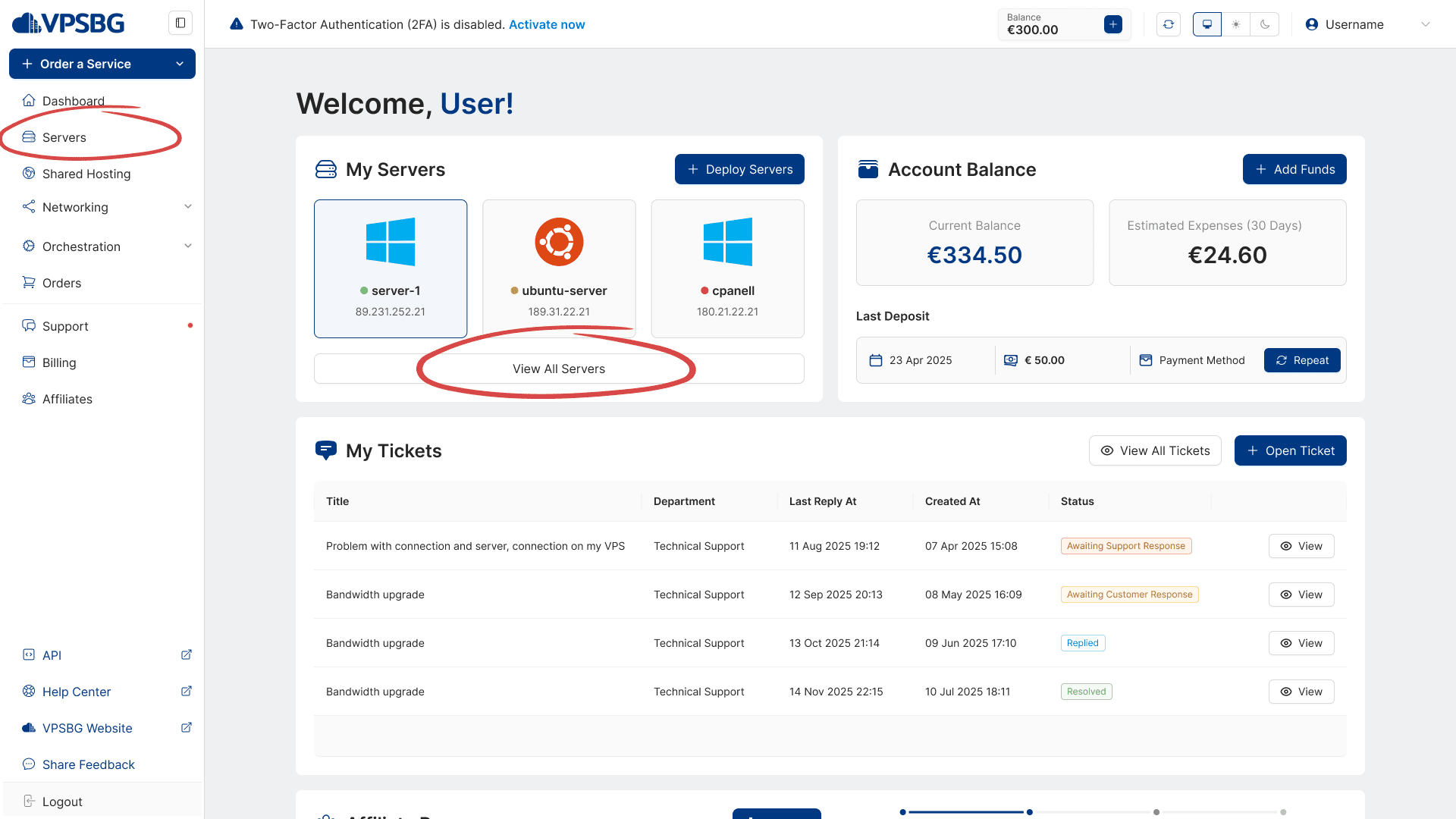
go to servers

From here, click on the “Servers” button from the menu on the left. This will take you to a page with a list of all of your services.

Step 3: Find the server for which you want to restore a backup

Having arrived at the servers page, you will now want to find the server you would like to activate automatic backups for. You will see a green dot in front of your active servers alongside the server hostname and IP addresses attached to the server.

The next step is to simply click on the “Manage” button for your desired server.
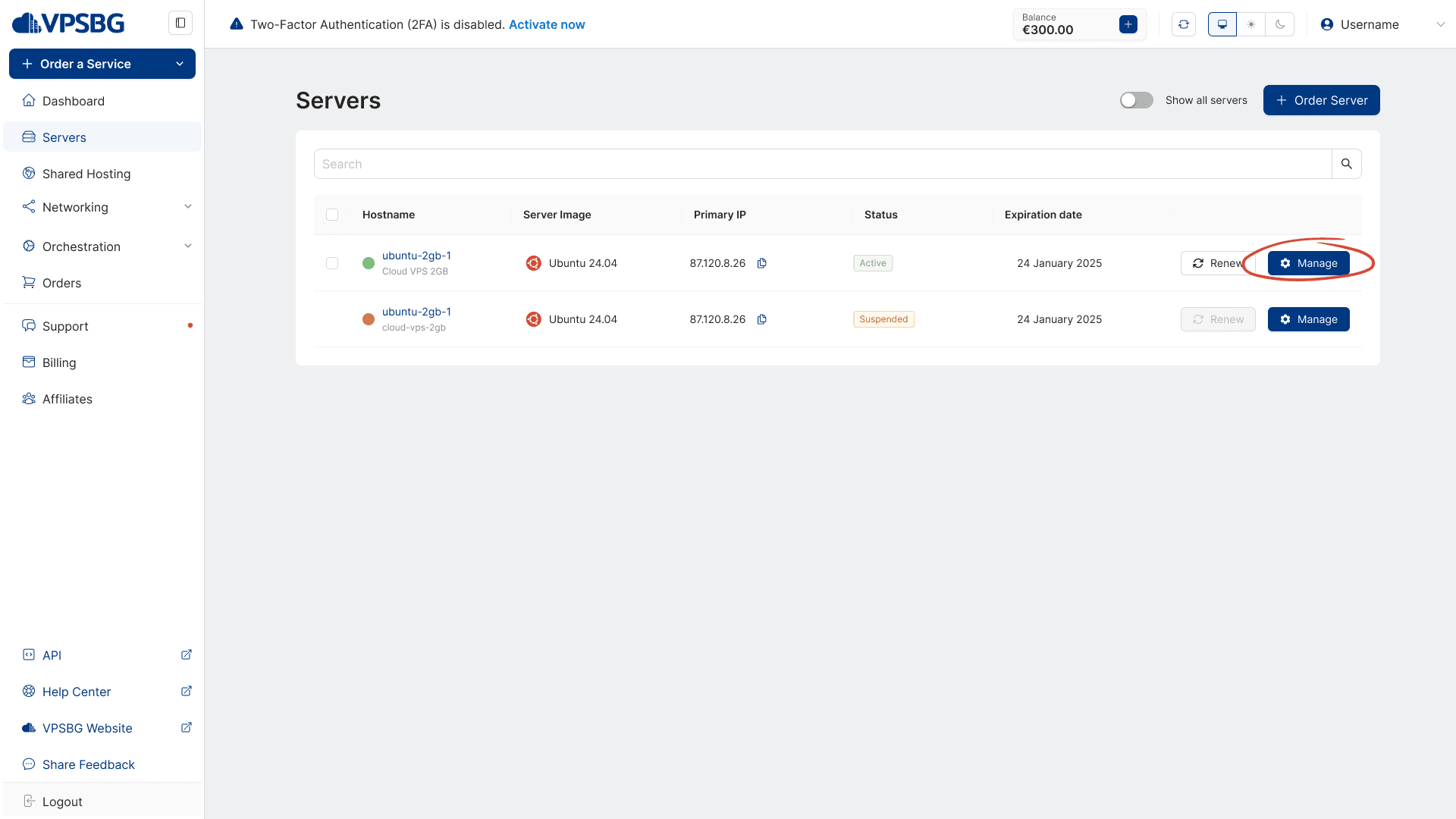
to go manage server

Step 4: Restoring a backup

Restoring a backup is a very simple process. Simply navigate to the “Backups” tab. You will now see a list of all manual and automatic backups for your account, for all of your services. You will also see a This Server label next to all backups that originate from the server you are currently viewing. This is because you can choose to restore a backup from another server, allowing you to essentially clone the original. Once you have selected your desired backup, just click on the “Restore” button next to it.
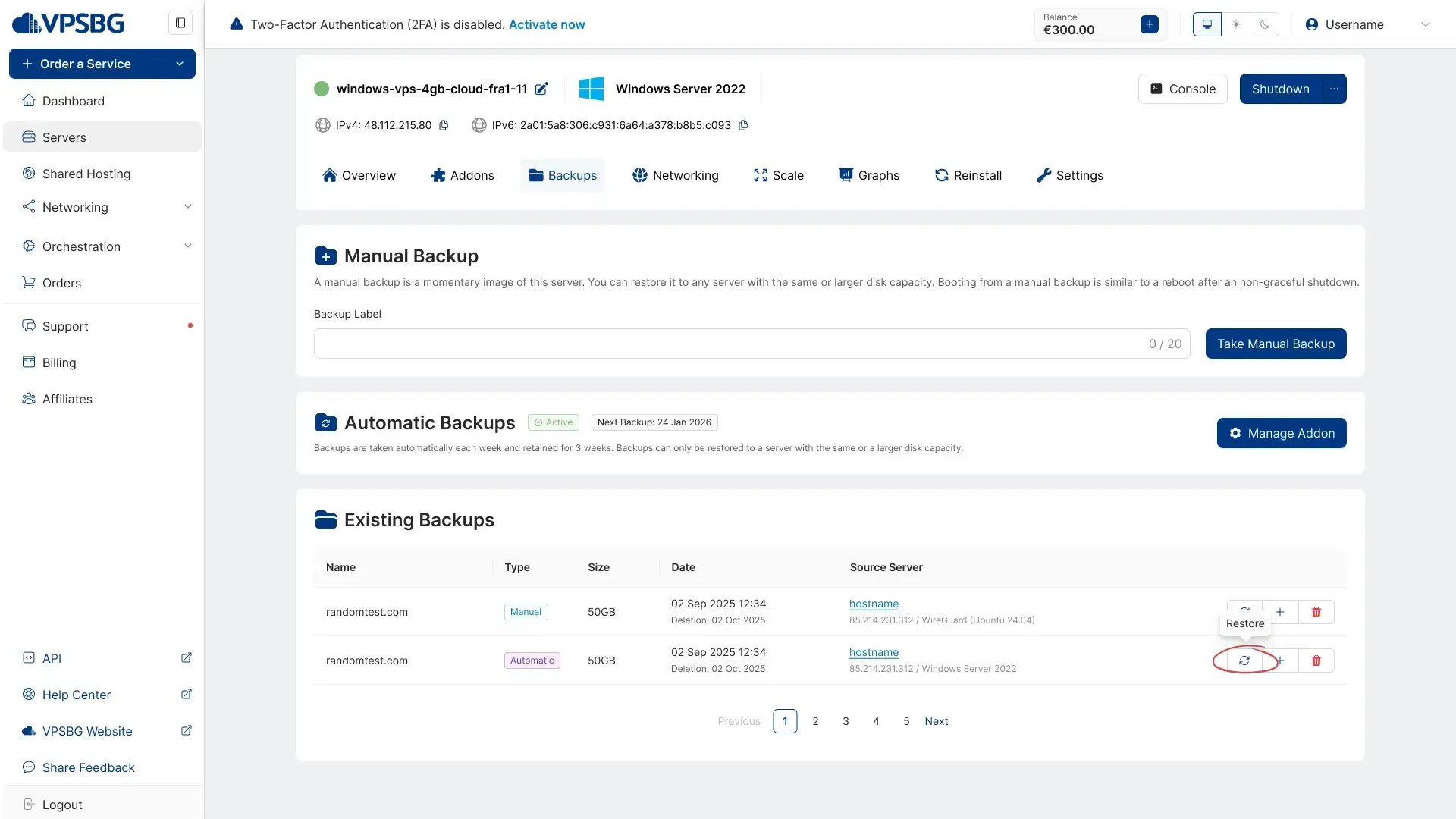
click on restore

When you click on the button, you will be presented with the following selection menu:
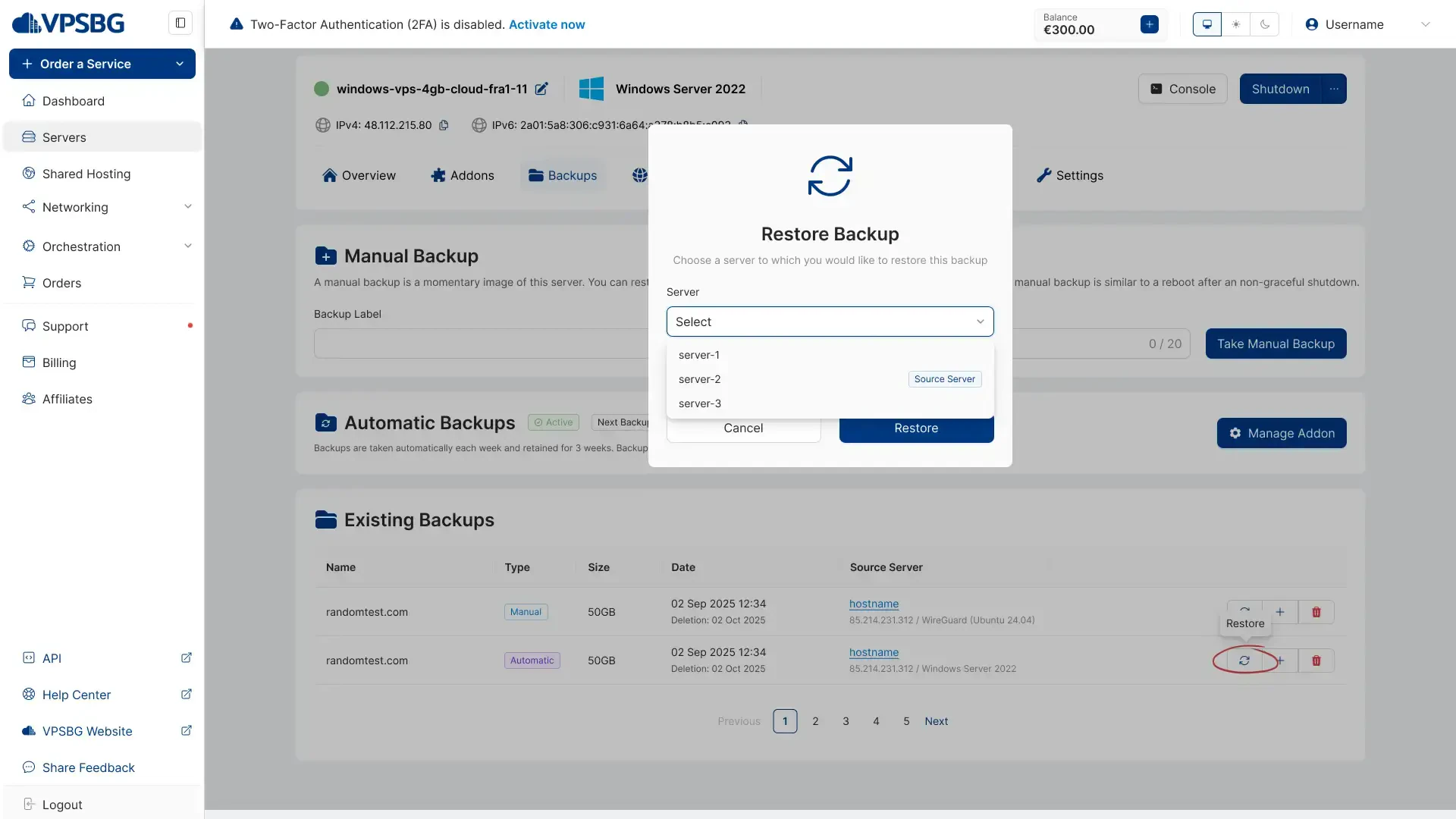
choose restore server target

From the dropdown menu select the server you want to restore to and click on ‘Restore’. That’s it! 

When the restoration process begins, your server will get locked until the process finishes. This locked state prevents any potential errors and problems that could occur with the server until the recovery completes. All that you need to do now is to just wait until the restoration finishes.

Restoring a backup from the Orchestration tab

You can also alternatively restore a backup from the Orchestration tab and the Backups section, which can be found in the menu on the left.
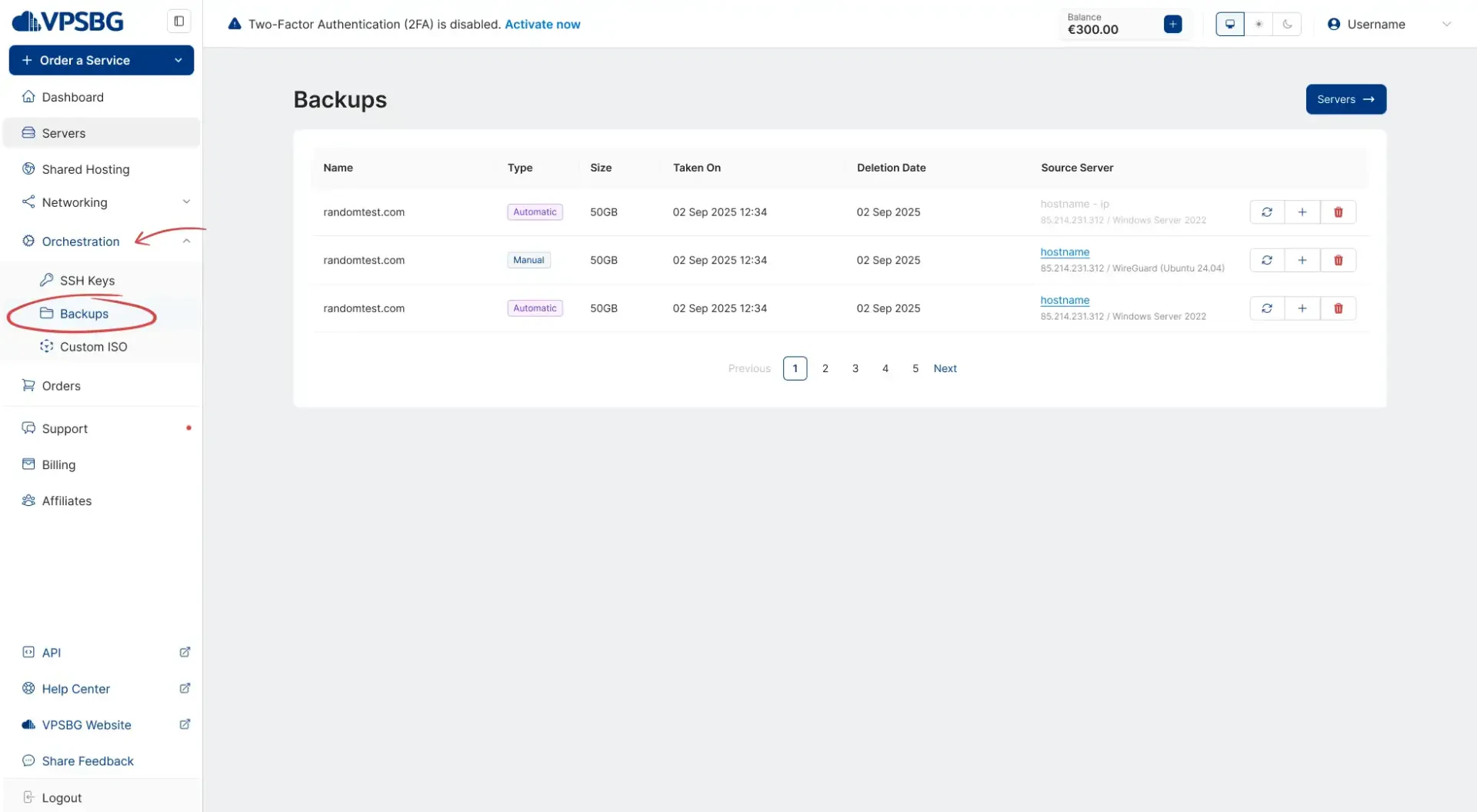
orchestration tab backups

This Backups page contains a list of all of your backups so that you can easily manage them from one single place. Simply select the backup that you would like to restore and click on the “Restore” button next to it. Select a server from the list and restore your backup. Once the process has been initiated you will see a message that a backup is currently being restored.
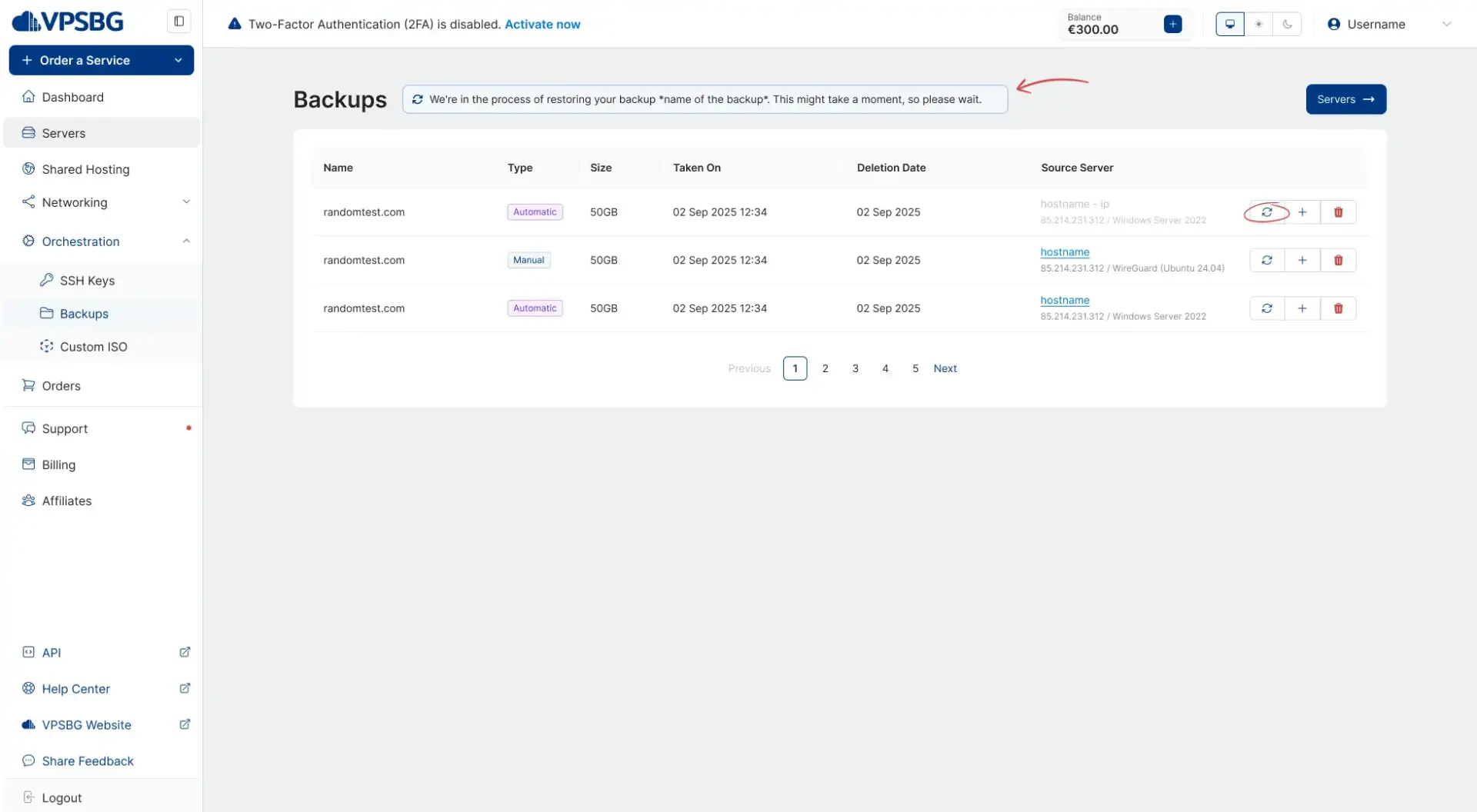
restoring from orchestration

Overall, restoring a backup to your VPSBG server is relatively easy and we hope that this tutorial has managed to teach you how to successfully complete both processes.

Subscribe to Our Newsletter

Join 5000+ subscribers and receive helpful content, deals and more! We promise no spam - 100% great content. Unsubscribe anytime.

Share Article

Related Content

19 July 2023

How to install Windows on a cloud server

In this tutorial, we are going to show you how to install Windows OS on your cloud server from an ISO file with Windows Server 2022 & VirtuIO drivers.

#Tutorial#Windows
01 April 2025

How to perform AMD SEV-SNP attestation inside a guest virtual machine

In this tutorial, we are going to show you how to perform AMD SEV-SNP attestation inside a guest virtual machine to verify trust and security.

#Tutorial#SEV
15 January 2023

How to set up Laravel Forge on your VPS server

Learn how to install Laravel Forge on your VPS or VDS and start managing your Linux server. Deploy PHP applications and databases with ease.

#Tutorial#Laravel

Unrivaled Performance & Security

Deploy a powerful and reliable Cloud VPS today to ensure your privacy. SEV-SNP included for maximum protection.

Configure VPSContact Us