How to manage, attach & detach your Floating IPs
Published: 19 April 2021 • Updated: 14 August 2026 • 7 min read
We've already discussed the importance of floating IPs and how you can order one and in this documentation entry we are going to focus on how to manage, attach, detach and cancel them!
How to attach or detach a Floating IP to your server
In order to attach a floating IP to your server, you will need to first purchase it from the Console. Once it has been activated, you can proceed to attach it to your server.
Simply navigate to the ‘Networking’ tab and then click on the ‘Floating IPs’ button.
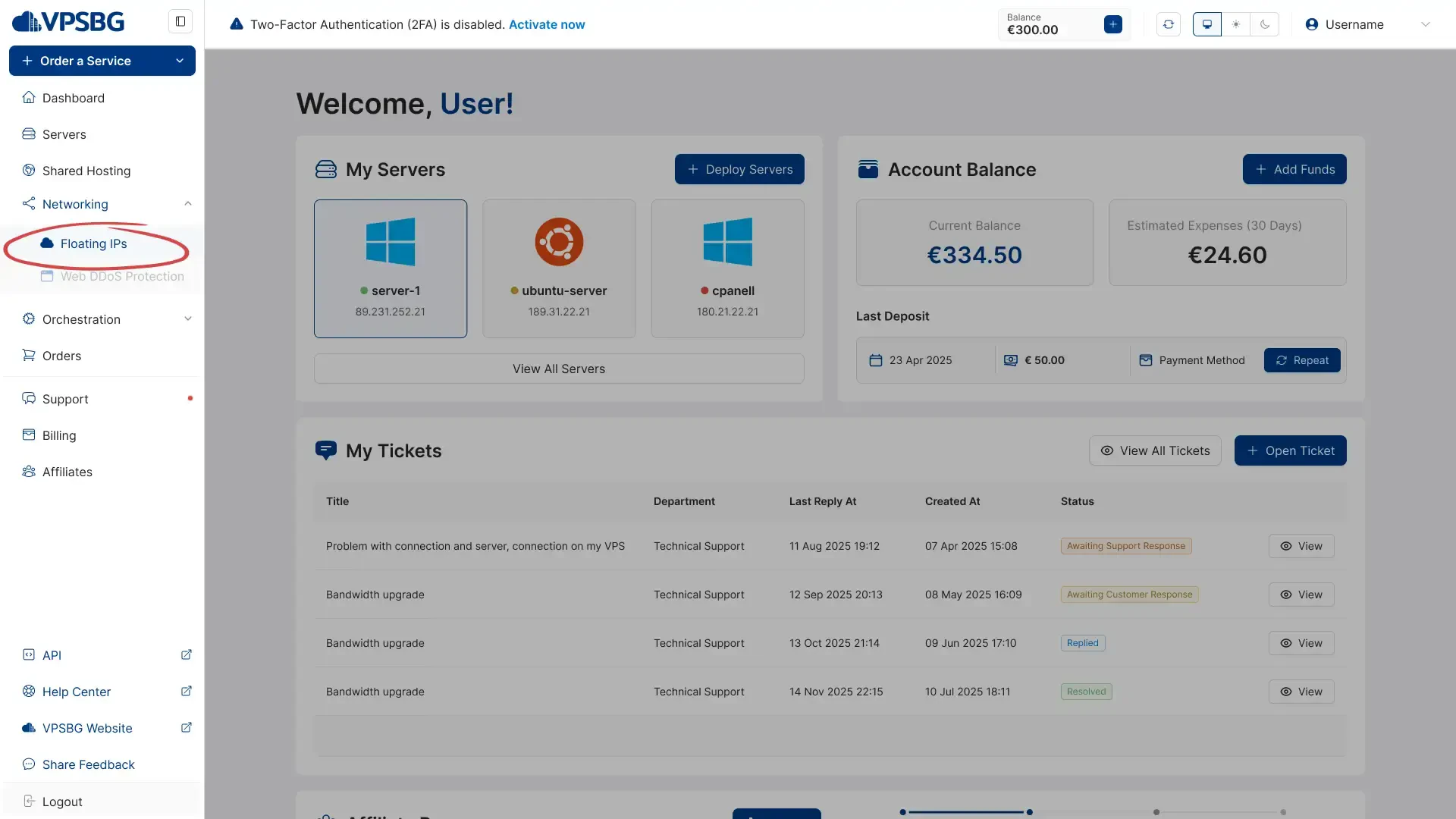
You will then be presented with a list of all of your IP addresses:
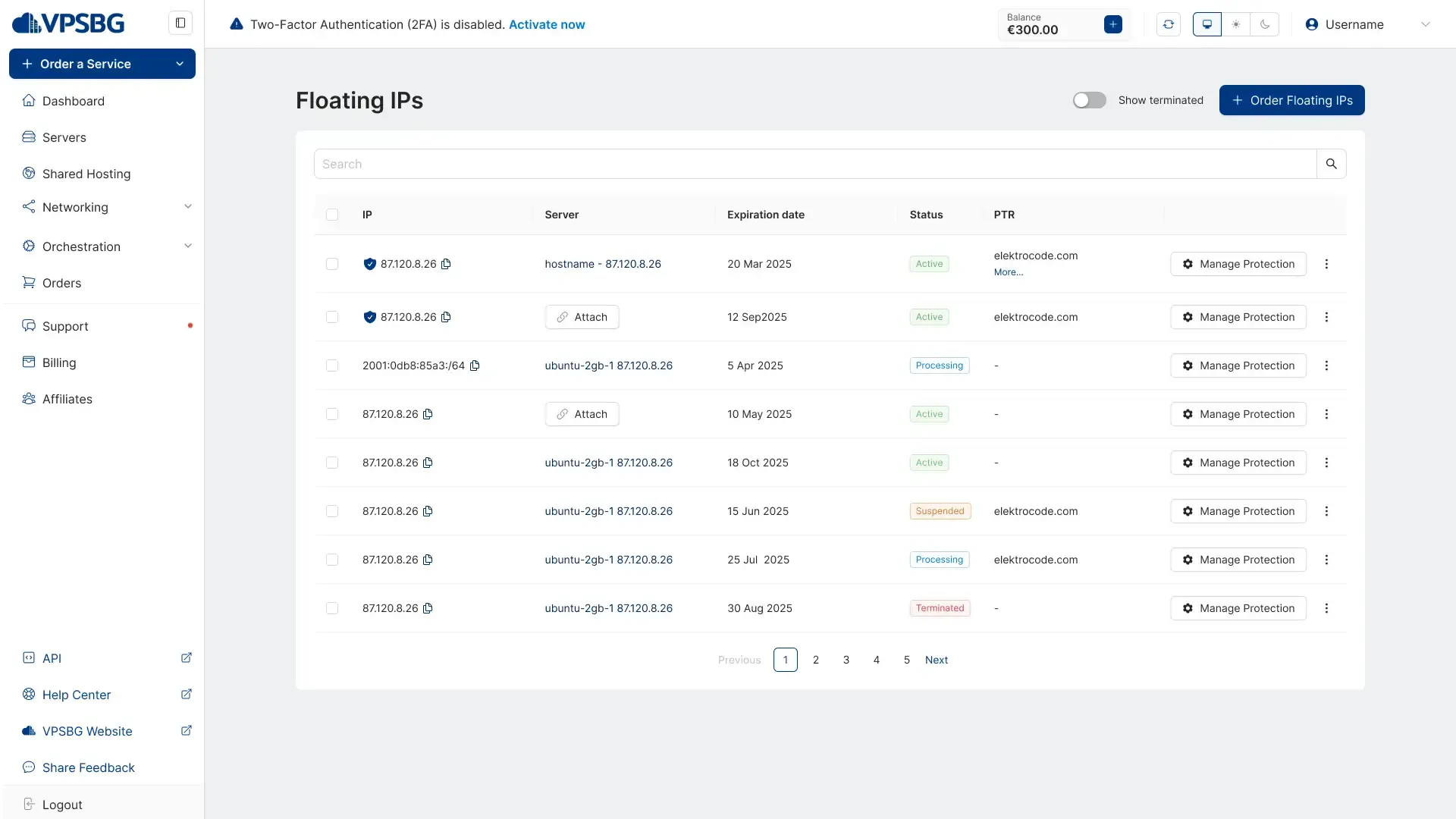
Each floating IP has a menu, which can be accessed by clicking on the 3 dots as seen:
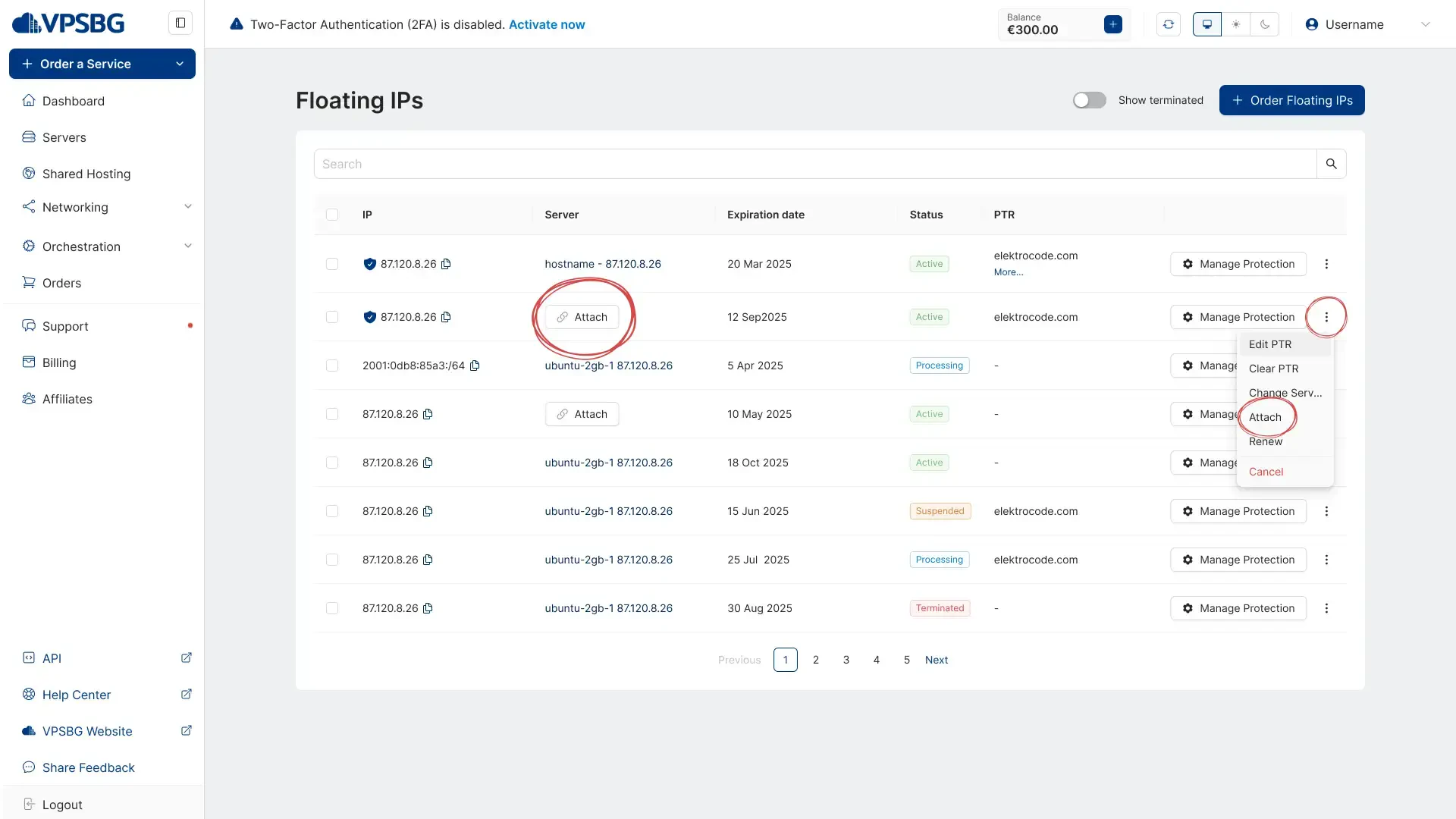
These options allow you to manage your floating IPs. To attach an IP to a server, click on the ‘Attach’ button. A pop-up configuration window will then appear, from which you can choose the server that you wish to attach the IP address to. After you have chosen the server, press the ‘Attach’ button. If you wish to detach a floating IP, you can do so by simply clicking on the detach button next to the IP or the detach button found in the menu on the right side of your screen.
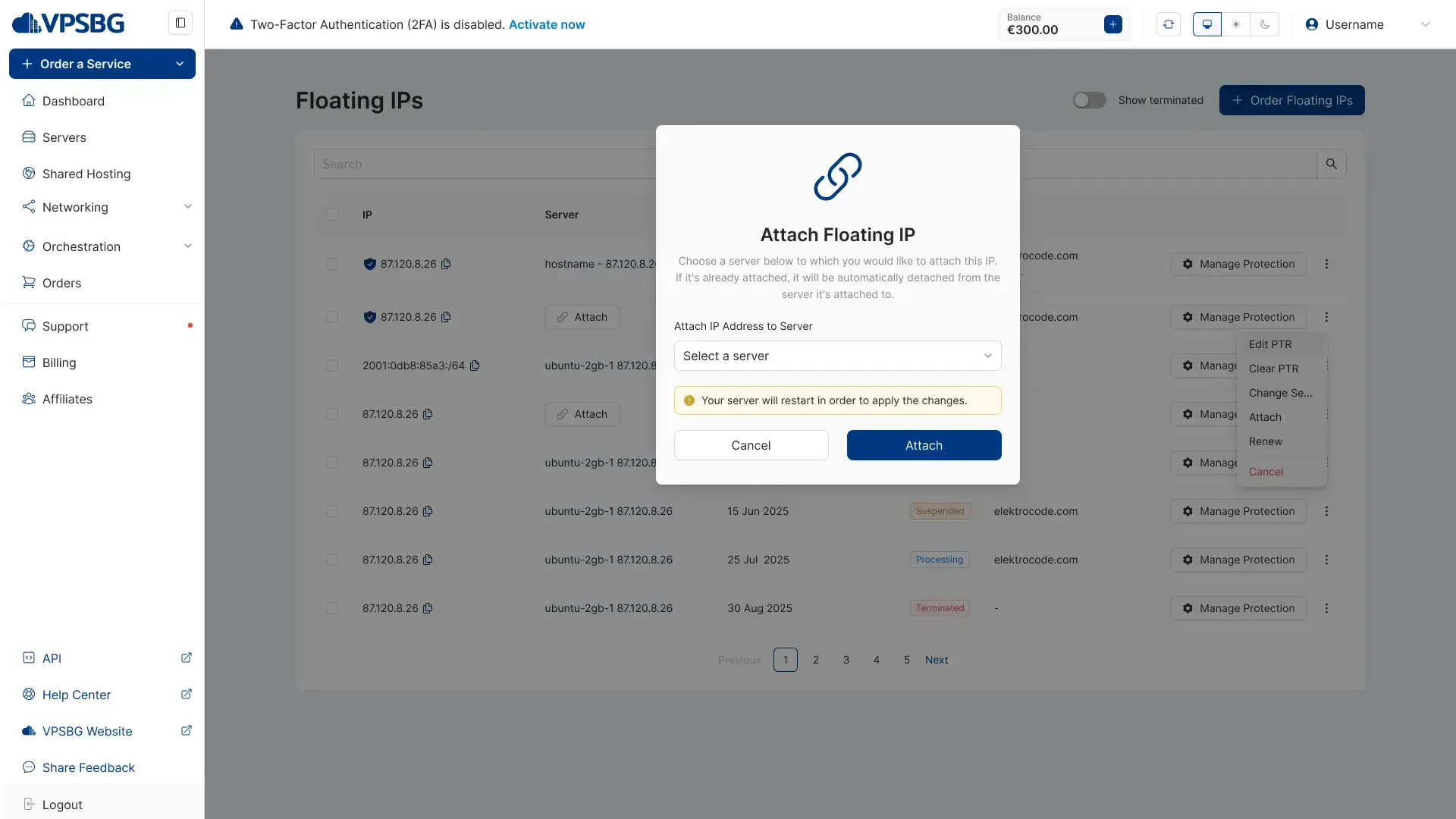
IMPORTANT: When attaching an IP to a cloud VPS or VDS, the server will automatically reboot in order to apply the changes.
Now that the IP address has been attached from the Console, some IPs will require you to manually assign them to your server. If you see the following message, then your IP will need to be manually assigned.
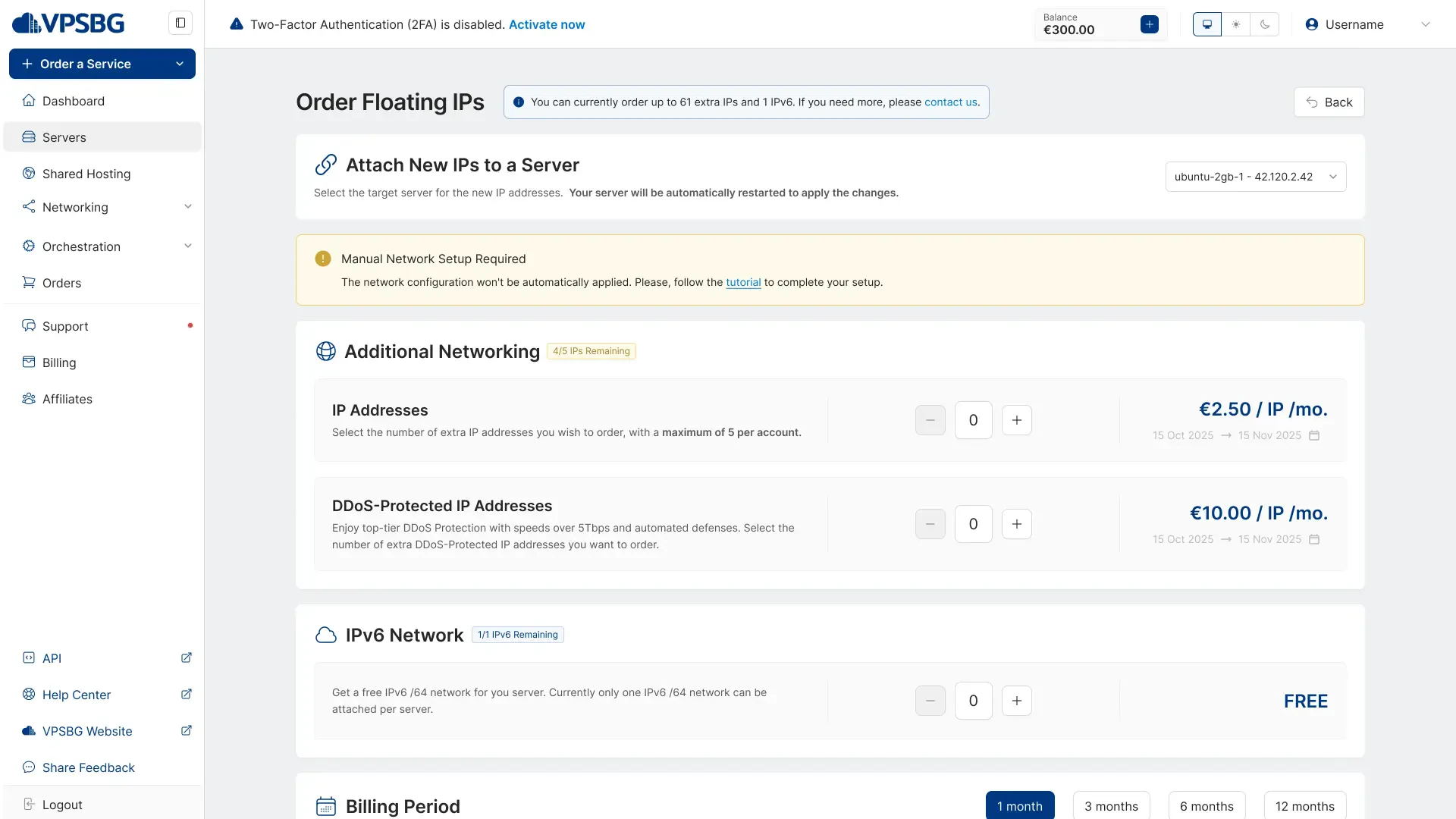
Here’s how to do it.
How to manage additional IPv4 addresses on Ubuntu & Debian
Firstly, you will need to identify your public network interface with the following command:
ip addr show scope globalThe expected interface name is eth0. If your interface has a different name, substitute it for eth0 in the steps below.
You should also check if Netplan is present:
ls /etc/netplanIf files are listed, follow the steps below. If not, your server may use /etc/network/interfaces for the network configuration instead of Netplan, which we are going to cover after the netplan file setup.
Netplan configuration
Next, create a new netplan file:
install -m 600 /dev/stdin /etc/netplan/60-additional-ipv4.yaml <<'EOF'
network:
  version: 2
  ethernets:
    eth0:
      addresses:
        - 192.0.2.3/32
EOF
IMPORTANT: Make sure to replace 192.0.2.3/32 with the IPv4 address you have purchased.
If you wish to assign multiple addresses, list each one on its own line under addresses:
addresses:
- 192.0.2.3/32
- 192.0.2.4/32
If you previously added an address using this method, edit the existing file rather than creating a new one.
To remove an address, simply delete its line from the YAML file. If there is only a single IP address there and you want it removed, you will need to delete the whole file.
Next, apply the configuration:
netplan applyFinally, verify that the IP is present:
ip addr show eth0You should see the additional IPv4 address(es) listed with /32. This configuration is persistent and will survive on reboot.
Network configuration uses /etc/network/interfaces
In cases where your network configuration uses /etc/network/interfaces, here's an example config with one main IPv4 address (192.0.2.3) and two additional IPv4 addresses (192.0.2.4, 192.0.2.5). Replace these example addresses with your own assigned IP addresses.
auto lo
iface lo inet loopback

auto eth0
iface eth0 inet static
    address 192.0.2.3
    netmask 255.255.255.255
    gateway 172.16.0.1
    pointopoint 172.16.0.1

auto eth0:0
iface eth0:0 inet static
    address 192.0.2.4
    netmask 255.255.255.255

auto eth0:1
iface eth0:1 inet static
    address 192.0.2.5
    netmask 255.255.255.255
After editing the file, restart networking or reboot the server for the changes to take effect.
How to manage additional IPv4 addresses on AlmaLinux, Rocky Linux, Fedora
First, find the active NetworkManager connection profile:
nmcli -f NAME,DEVICE,TYPE connection show --activeThen, identify the connection whose DEVICE is eth0. The connection name is usually "cloud-init eth0" or "System eth0". Use that name in the commands below.
Add an additional IPv4 address (replace 192.0.2.3 with your purchased address):
nmcli connection modify "cloud-init eth0" +ipv4.addresses 192.0.2.3/32To assign multiple addresses, run the same command once for each address.
If you want to remove an address, use “-” instead of “+”:
nmcli connection modify "cloud-init eth0" -ipv4.addresses 192.0.2.3/32Next, apply the changes by reactivating the connection:
nmcli connection up "cloud-init eth0"Finally, make sure to verify:
ip addr show eth0You should see the additional IPv4 address(es) with /32. This configuration is persistent and will survive reboot.
How to manage IPv6 addresses on Ubuntu and Debian
When you order an additional IPv6 subnet after your server has been already provisioned, it will not be configured automatically. You will receive one IPv6 /64 subnet and you can manually assign any number of individual addresses from it.
IMPORTANT: If your interface name differs from eth0, substitute it in the steps below (see the IPv4 guide for how to identify your interface).
Start by creating a new netplan file:
install -m 600 /dev/stdin /etc/netplan/60-additional-ipv6.yaml <<'EOF'
network:
  version: 2
  ethernets:
    eth0:
      addresses:
        - 2a00:1728:f:100::1/64
      routes:
        - to: default
          via: fe80::1
EOF
IMPORTANT: Replace 2a00:1728:f:100::1 with an address from your assigned /64 subnet.
To use multiple addresses from your subnet, list each one under addresses:
addresses:
 - 2a00:1728:f:100::1/64
- 2a00:1728:f:100::2/64
- 2a00:1728:f:100::100/64
To remove an address, delete its line from the file.
IMPORTANT: The routes section and at least one address must remain! Delete the file to remove any previously set additional IPv6 configuration.
Next, apply the configuration:
netplan applyFinally, make sure to verify that everything is set correctly:
ip -6 addr show eth0
ip -6 route
You should see your IPv6 address(es) with /64 on eth0 and a default route via fe80::1.
How to manage IPv6 addresses on AlmaLinux, Rocky Linux, Fedora
Similarly to Ubuntu and Debian, when you order an additional IPv6 subnet after your server has been provisioned, it will not be automatically configured. You will instead receive one IPv6 /64 subnet and you can manually assign any number of individual addresses from it.
Firstly, find the active NetworkManager connection profile:
nmcli -f NAME,DEVICE,TYPE connection show --activeThen, identify the connection whose DEVICE is eth0. The connection name is usually "cloud-init eth0" or "System eth0". Use that name in the commands below.
Add an IPv6 address and set the gateway (replace 2a00:1728:f:100::1 with an address from your assigned /64 subnet):
nmcli connection modify "cloud-init eth0" +ipv6.addresses 2a00:1728:f:100::1/64
nmcli connection modify "cloud-init eth0" ipv6.gateway fe80::1
To assign additional addresses from your subnet, run the first command again with each new address. The gateway only needs to be set once but can safely be repeated.
If you wish to remove and address that you have already added, you can do so with:
nmcli connection modify "cloud-init eth0" -ipv6.addresses 2a00:1728:f:100::1/64 To remove all manually added IPv6 configuration:
nmcli connection modify "cloud-init eth0" ipv6.gateway ""
nmcli connection modify "cloud-init eth0" ipv6.addresses ""
Apply the changes by reactivating the connection:
nmcli connection up "cloud-init eth0"Again, make sure to verify:
ip -6 addr show eth0
ip -6 route
You should see your IPv6 address(es) with /64 on eth0 and a default route via fe80::1.
You can now manually add and remove additional IPv4 addresses and attach or detach an IPv6 /64 subnet on your VPS or VDS.
If you encounter any issues regarding our Floating IPs, do not hesitate to contact us.
How to manage floating IPs on a Windows Server
Managing additional IPv4 or IPv6 addresses for a Windows Server happens by first connecting through RDP and then making the required network settings changes, which happens differently then all of the aforementioned Linux-based operating systems. If you are running a Windows Server and have purchased any additional floating IPs, please visit our detailed guide on how to manage additional IP address on a Windows server.
How to cancel a Floating IP
If you don’t need a given IP, you can easily cancel it. If you choose to cancel an address, it will leave your IP pool and you will not be able to use it anymore.
To cancel an IP, go to your Floating IPs page and click on the 3 dots menu. From the available options, select Cancel IP for the address that you wish to cancel.
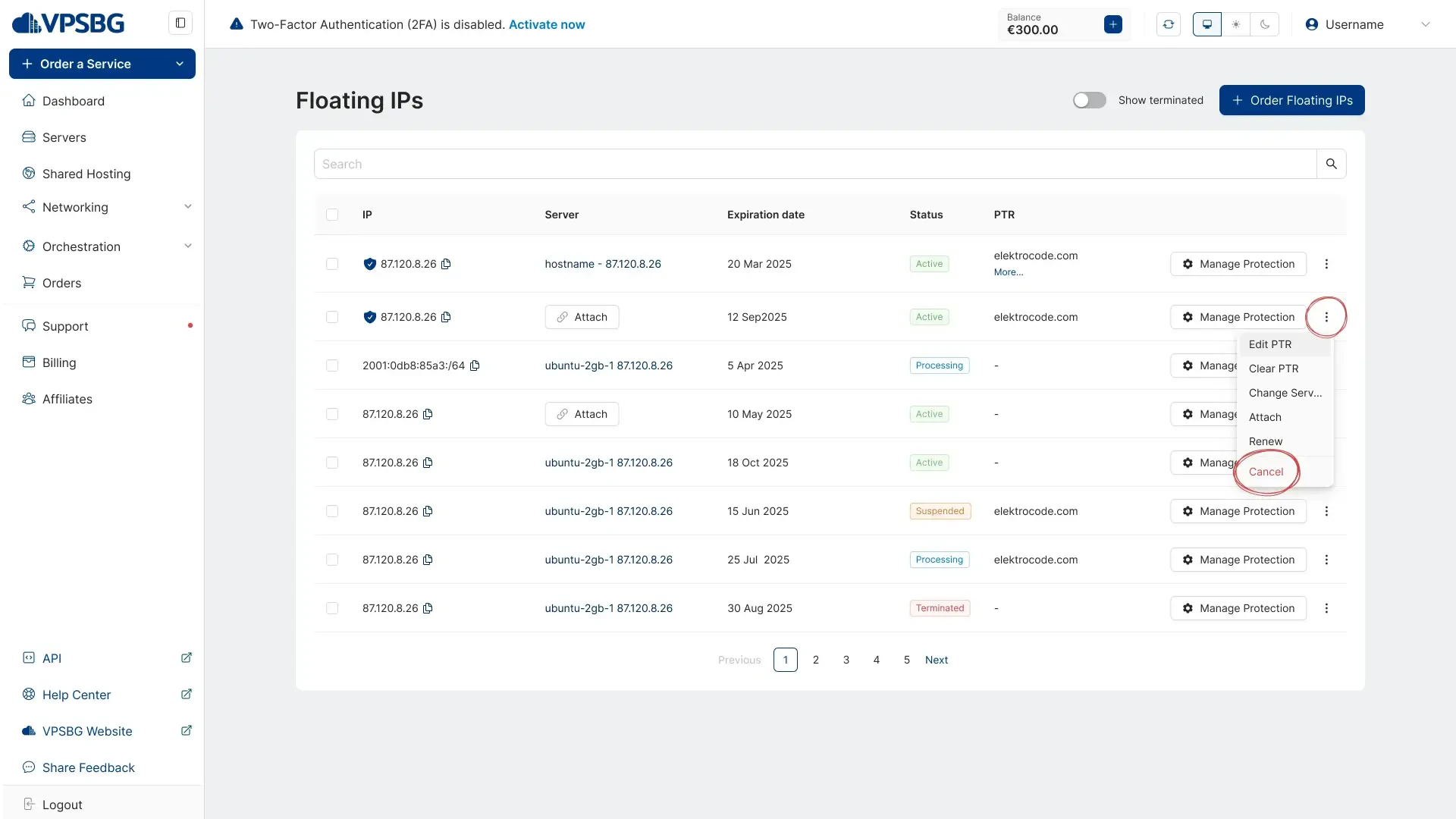
Next, select when you would like to cancel your floating IP and that’s it.
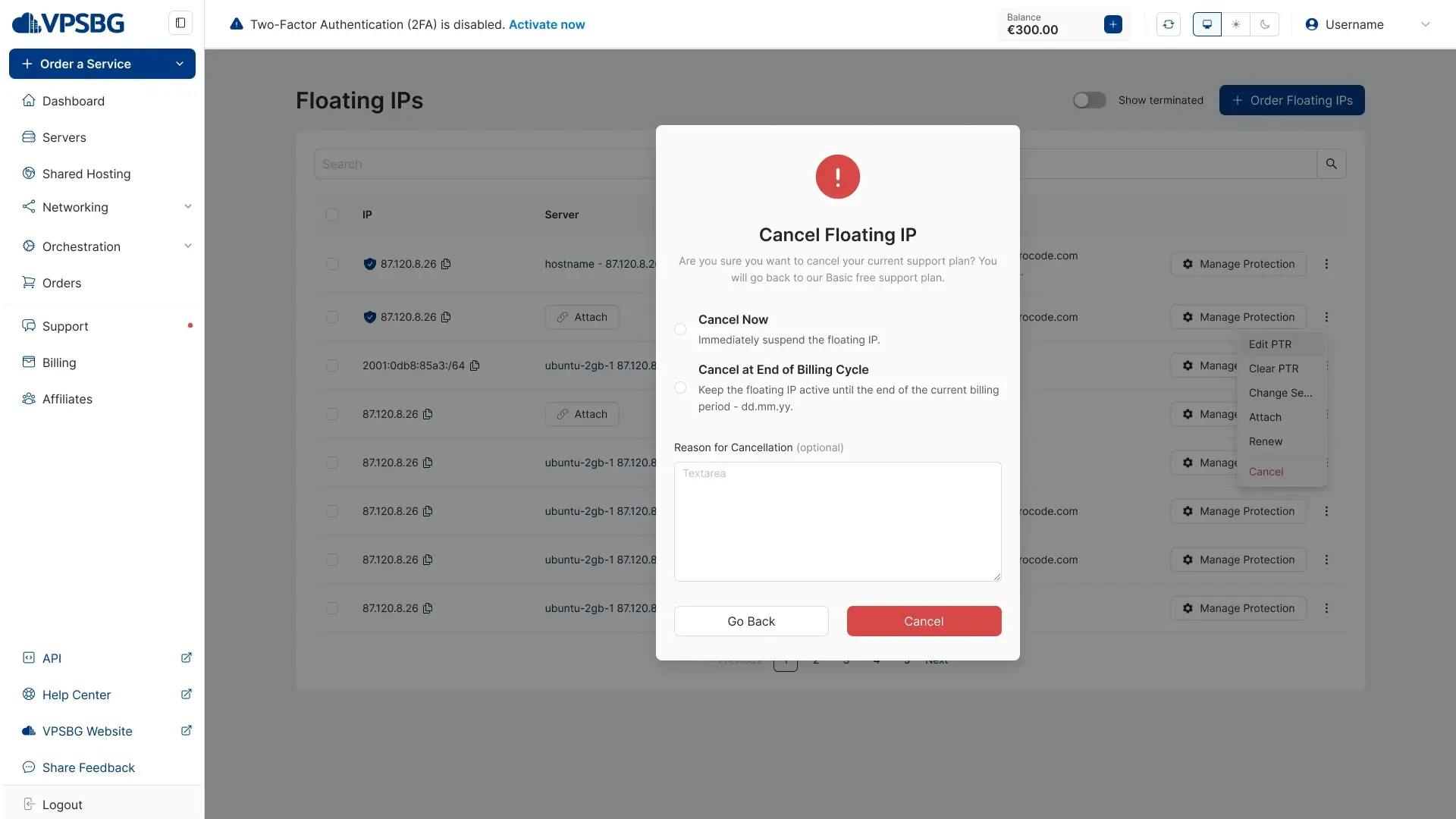
If you have any questions you can always reach out.