Need a hosting provider but don’t know what to look for? We’ve got you covered!
We know that when looking at 2 or more similar products or services, the price is usually the deciding factor that determines which one you go for. However, we are here today to tell you that this is not the case when it comes to selecting a hosting provider and plan!
In today’s article we are going to give you 7, plus a few more, tips and things that you need to look out for when choosing a good hosting provider relating to server performance, additional features and security. So without further ado, let’s dive right in!
Premium server hardware will ensure great performance
First and foremost, you should definitely look into your targeted hosting provider’s server hardware.
The things that you need to check are the central processing unit (CPU), the active memory (RAM) and the storage medium.
In terms of CPUs, you can go for either Intel or AMD. Both brands have released a number of great server-compatible CPU models that are designed to handle many concurrent requests.
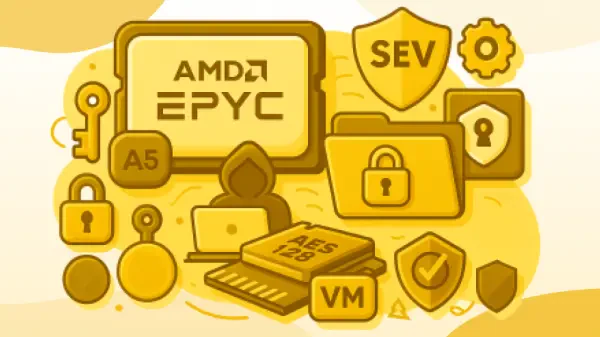
Our suggestion would be to go for a hosting provider that utilizes AMD EPYC CPUs due to the built in additional security. This line of processing units make use of the innovative SEV technology that allows each individual virtual machine to be isolated, preventing outsider access, ultimately strengthening overall server security.
In terms of storage, we’d recommend going for a provider that can offer you an SSD as a storage medium. This is because newer SSD technology is much faster and better than the traditional technology used in HDD.
However, you should also pay attention to the information exchange protocol. We would recommend using NVMe SSDs over SATA SSDs due to the protocol’s ability to deliver lightning-fast speeds and data exchange.
NVMe boasts a much better read-write operation ratio, which will ultimately result in your server performing better, making your customers, visitors and general users happier.
It is also crucial to remember that having a fast server can also decrease the loading time of your hosted website or application, which will positively influence your user experience metrics and consequently result in better overall SERP performance.
Traffic volume & unmetered bandwidth
The next thing that you need to consider is how much traffic your hosting provider can offer. Traffic volume refers to the amount of bandwidth that your website or application will consume on a monthly basis and it represents the amount of information that can be exchanged between the server and your visitors.
If you are the owner of a huge business or company, for example working in the field of e-commerce, then you most certainly need to consider going for a hosting plan that has a lot of bandwidth.
As a matter of fact, you can even search for a provider that can offer you high-speed, unmetered traffic so that you never have to worry about running out of bandwidth. This is usually sold as an additional feature as direct unlimited hosting isn’t really profitable.
Get some DDoS protection to protect your resources
The third feature that you should look for in a hosting provider is whether they can offer you strong and reliable DDoS protection.
Online cyberattacks, especially DDoS attacks, are becoming increasingly more prevalent, affecting more and more websites worldwide.
In order to keep your website safe and secure, you need to get some additional DDoS protection. Most hosting providers will already have their own implementation, which can be directly included in your hosting plan. Others will have it as an additional feature, which you can purchase on the side.
If you don’t want to utilize your hosting provider’s DDoS protection, you can also go for a third-party option. Generally speaking, third-party protection is good, however, sticking with your provider’s own implementation is usually the better choice due to security and logistical reasons.
Server backups are your best friend
The next tip that you can use when choosing a hosting provider is to check whether they can offer you server backups.
Keeping your website and database information backed up is absolutely critical as that can prevent data loss, which can be caused by both external and internal factors such as a targeted hacker attack or a complete server meltdown.
Manual backups are momentous captures of your website or application, making them a perfect tool to utilize when testing new features, design or functionalities. This is because they can be easily restored, taking much less time to create and rollback to if necessary.
As a side note, they can also be used to clone your server, which can also help you create a testing environment if you don’t already have one.
On the other hand, there are also backups. Full server backups are extremely important as they capture all of the information on your server, enabling you to restore anything if needed. This includes your website or application and its database.
Additionally, it’s an added benefit if your hosting provider also has an automatic backup feature. That way you will never have to worry about forgetting to manually create a backup every so often.
Just remember to also download your newest backup and store it locally onto your machine in order to have it as an additional layer of security in case something were to happen to the ones in your hosting account.
Never neglect server security & customer privacy
Speaking of security, when choosing a hosting provider, you need to be on the lookout for how secure their servers are in addition to paying attention to how they protect their customers’ privacy.
For example, one of the most important security features that a hosting provider can offer you is an active SSL certificate. The SSL certificate allows for data encryption over your website, meaning that your visitor’s data will be kept private and secure, preventing middleman attacks that can occur during an unsafe connection.
Some providers include the SSL price into the hosting plans, while others offer it as a separate item. However, if you wish to not spend additional cash, you can always get a free Let’s encrypt SSL certificate or you can just look for a provider that offers it.
The next thing that we want to focus on is user privacy. There are many different actions that a hosting provider can take to protect their customers’ privacy.
We at VPSBG for example, don’t use any third-party cookies anywhere on our website in order to protect our users’ personal information.
Another feature that can be implemented is accepting crypto payments. Services like Bitcoin VPS are becoming increasingly more popular due to the fact that users can protect their privacy and identity when paying with crypto.
There are a plethora of different advantages of paying with Bitcoin not only for your server, but for other online goods and services as well, one of the most valuable being cheaper international transactions, which can be quite useful especially when buying a server in a different location across the planet.
Wide range of supported software & operating system diversity
Our penultimate tip when choosing a hosting provider involves meticulously checking the supported software and the available operating systems.
Content management systems are very popular across the Web. For example, over 34% of all global websites run on WordPress, meaning that the CMS should definitely be offered by your hosting provider.
The same applies to server control panel software like cPanel. Although cPanel prices are constantly going up, the software still remains one of the most popular tools for website and server management worldwide.
Of course, you might not want to use the aforementioned software, hence why it is good if your hosting provider can offer you different options. For example, there are a number of cPanel alternatives with one of the most popular ones being DirectAdmin.
Another thing that you need to consider is the operating system that your server will be running on. In general, most people would go for a Linux distribution like the old-school Debian or CentOS or a new one such as RockyLinux or AlmaLinux. However, there are also those who don’t have prior working experience with Linux and would be much more satisfied if they could have their server run on Windows.
Because of this, services like Windows VPS have also started to gain traction on the Web, with more people actively purchasing a Windows-operated server. However, it is important to note that such a server comes with a separate license that you need to purchase. Most hosting providers include the price in the plan, hence why sometimes Windows plans appear to be more expensive.
Plan flexibility, scalability & constant uptime
Our final suggestion when it comes to choosing a hosting provider is to check whether their plans offer any flexibility. Server scalability is crucial to have as a feature as that allows you to purchase additional resources for your server without changing your entire hosting plan.
This is especially helpful for seasonal businesses and companies that experience high fluxes of traffic only at particular times during the year. This flexibility and scalability also allows you to downgrade your server, meaning that you will not have to pay extra for resources that you don’t use.
Again, this can be quite helpful, if you are just starting out and you can’t predict the amount of traffic that your website or application will be receiving.
As for the server uptime, make sure to look for a hosting provider that can offer you near constant uptime. A good number to seek would be over 99.5%, which will ensure your website remains online as much as possible and is not disrupted by maintenance downtime.
For example, you can image having server downtime like so:
99.5% uptime = 0.5% downtime = 7.2 minutes/day or 0.84 hours/week or 3.6 hours/month or 1.83 days/year downtime
99.9% uptime = 0.1% downtime = 1.44 minutes/day or 0.17 hours/week or 0.72 hours/month or 8.8 hours/year downtime
If you want to be extra secure and confident that your server won’t randomly experience downtime, you can also look for a hosting provider that can offer you a floating IP feature, allowing you to quickly change your IP address to a new machine.
Other factors and features to look out for
There will always be other beneficial factors that you need to check for. Some of the most popular ones include 24/7 support and free website migration.
Having a dedicated support team that will be able to help you resolve any problems 24/7 is something that can save your website/application’s uptime and reputation as quick responses are sometimes vital when it comes to addressing security issues.
Free website migration can also be of use if you are intending on changing your hosting provider.
Overall, there are many factors that you need to take into consideration when it comes to choosing or changing your hosting provider. The tips that we mentioned in this article are only the tip of the iceberg as there are many other individual features that you can find beneficial depending on your website type and structure. Regardless, you should always look for a hosting provider that can offer you powerful, reliable servers with useful add-ons and great customer service and support.